SALAH · STILLNESS
Pause until you are at ease in every position
Learn tuma'ninah from the Prophet's correction of a rushed prayer: bow, rise, prostrate, and sit with deliberate stillness.
SALAH · PRESENCE
Pause until you are at ease in every position
Learn how deliberate stillness can change the pace of your prayer.
NOTICE YOUR PACE
Do not let one posture blur into the next. Give each one time to settle.
A LESSON IN THE MOSQUE
A man prayed, but his movements were too rushed
The Prophet ﷺ corrected him, then showed him a better way.
The man prayed
A man entered the mosque, completed a prayer, and greeted the Prophet ﷺ.
He repeated it
The Prophet ﷺ told him to repeat the prayer because it had not been performed properly. This happened three times.
He asked to learn
The man explained that he could not do better and asked the Prophet ﷺ to teach him.
He was taught with care
The Prophet ﷺ guided him clearly through bowing, rising, prostrating, and sitting at ease.
Narrated Abu Huraira:
حَدَّثَنَا مُسَدَّدٌ، قَالَ أَخْبَرَنِي يَحْيَى بْنُ سَعِيدٍ، عَنْ عُبَيْدِ اللَّهِ، قَالَ حَدَّثَنَا سَعِيدٌ الْمَقْبُرِيُّ، عَنْ أَبِيهِ، عَنْ أَبِي هُرَيْرَةَ، أَنَّ النَّبِيَّ صلى الله عليه وسلم دَخَلَ الْمَسْجِدَ فَدَخَلَ رَجُلٌ فَصَلَّى ثُمَّ جَاءَ فَسَلَّمَ عَلَى النَّبِيِّ صلى الله عليه وسلم فَرَدَّ النَّبِيُّ صلى الله عليه وسلم عَلَيْهِ السَّلاَمَ فَقَالَ " ارْجِعْ فَصَلِّ فَإِنَّكَ لَمْ تُصَلِّ " فَصَلَّى، ثُمَّ جَاءَ فَسَلَّمَ عَلَى النَّبِيِّ صلى الله عليه وسلم فَقَالَ " ارْجِعْ فَصَلِّ فَإِنَّكَ لَمْ تُصَلِّ ". ثَلاَثًا. فَقَالَ وَالَّذِي بَعَثَكَ بِالْحَقِّ فَمَا أُحْسِنُ غَيْرَهُ فَعَلِّمْنِي. قَالَ " إِذَا قُمْتَ إِلَى الصَّلاَةِ فَكَبِّرْ، ثُمَّ اقْرَأْ مَا تَيَسَّرَ مَعَكَ مِنَ الْقُرْآنِ، ثُمَّ ارْكَعْ حَتَّى تَطْمَئِنَّ رَاكِعًا، ثُمَّ ارْفَعْ حَتَّى تَعْتَدِلَ قَائِمًا، ثُمَّ اسْجُدْ حَتَّى تَطْمَئِنَّ سَاجِدًا، ثُمَّ ارْفَعْ حَتَّى تَطْمَئِنَّ جَالِسًا، ثُمَّ اسْجُدْ حَتَّى تَطْمَئِنَّ سَاجِدًا، ثُمَّ افْعَلْ ذَلِكَ فِي صَلاَتِكَ كُلِّهَا ".
Once the Prophet (ﷺ) entered the mosque, a man came in, offered the prayer and greeted the Prophet. The Prophet returned his greeting and said to him, "Go back and pray again for you have not prayed." The man offered the prayer again, came back and greeted the Prophet. He said to him thrice, "Go back and pray again for you have not prayed." The man said, "By Him Who has sent you with the truth! I do not know a better way of praying. Kindly teach Me how to pray." He said, "When you stand for the prayer, say Takbir and then recite from the Qur'an what you know and then bow with calmness till you feel at ease, then rise from bowing till you stand straight. Afterwards prostrate calmly till you feel at ease and then raise (your head) and sit with Calmness till you feel at ease and then prostrate with calmness till you feel at ease in prostration and do the same in the whole of your prayer."
Still enough to be at ease
This deliberate calm is called tuma'ninah.
طُمَأْنِينَة
ṭumaʾnīnah · Stillness and ease in a prayer posture
You reach ṭumaʾnīnah when your body has settled instead of continuing immediately into the next movement.
Hurried movement
- The body reaches a posture and immediately leaves it
- Rising and lowering blend together
- The prayer feels like one continuous motion
Deliberate stillness
- The body reaches each posture and settles
- You stand fully straight after bowing
- You sit at ease between the prostrations
Agreement across the schools
The four schools of law agree that stillness is required in bowing and prostration.
MAKE IT CONCRETE
Let each posture arrive before you leave it
ONE MOVEMENT AT A TIME
Four places to pause
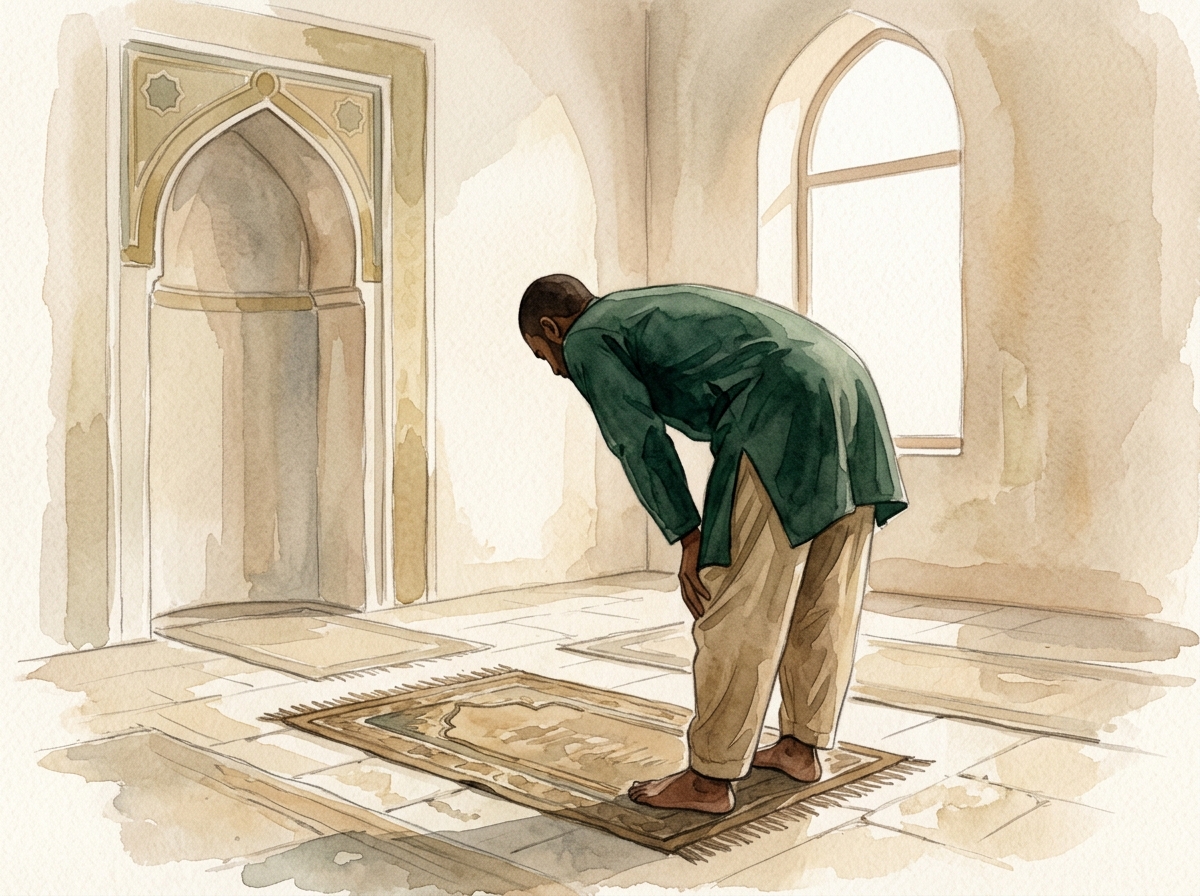
1. Bow and settle
Reach the bowing posture, then remain until you are at ease.
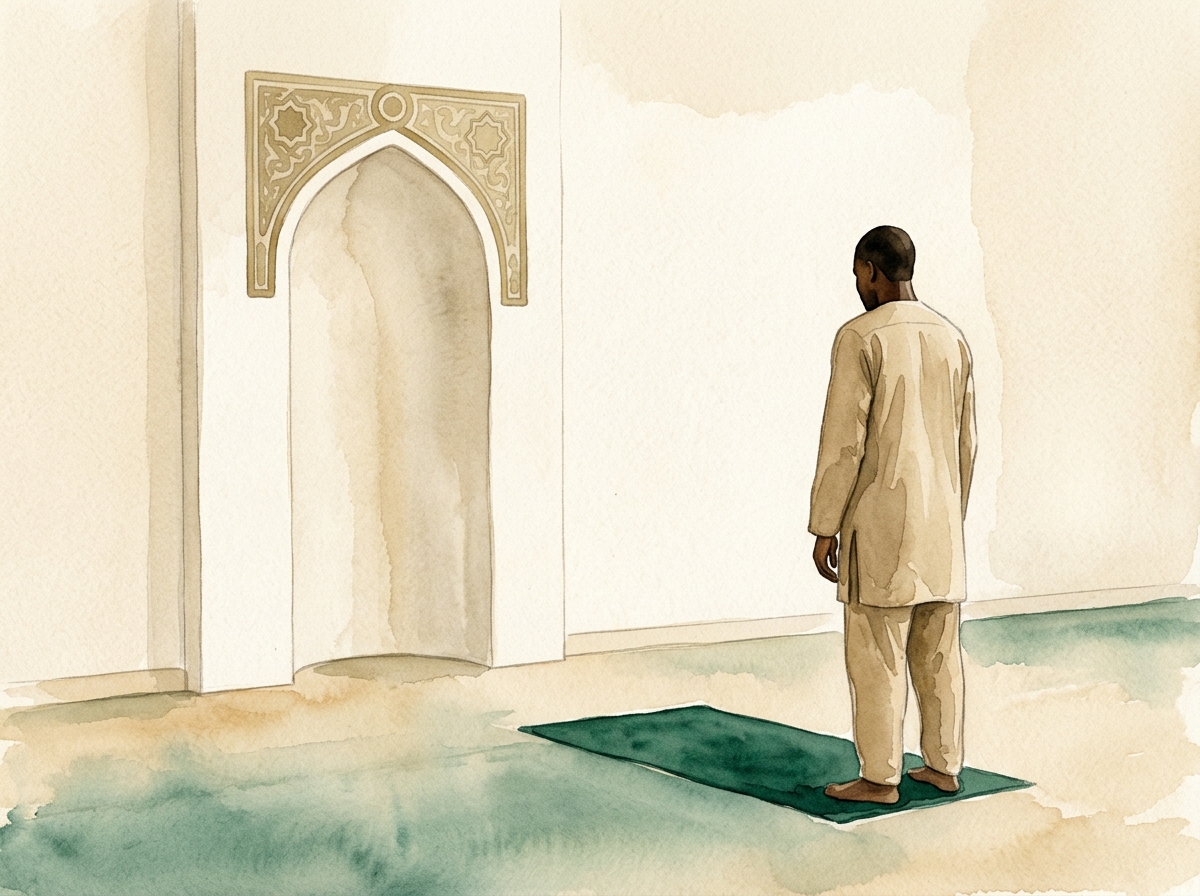
2. Rise fully
After bowing, rise and stand fully straight before moving down.
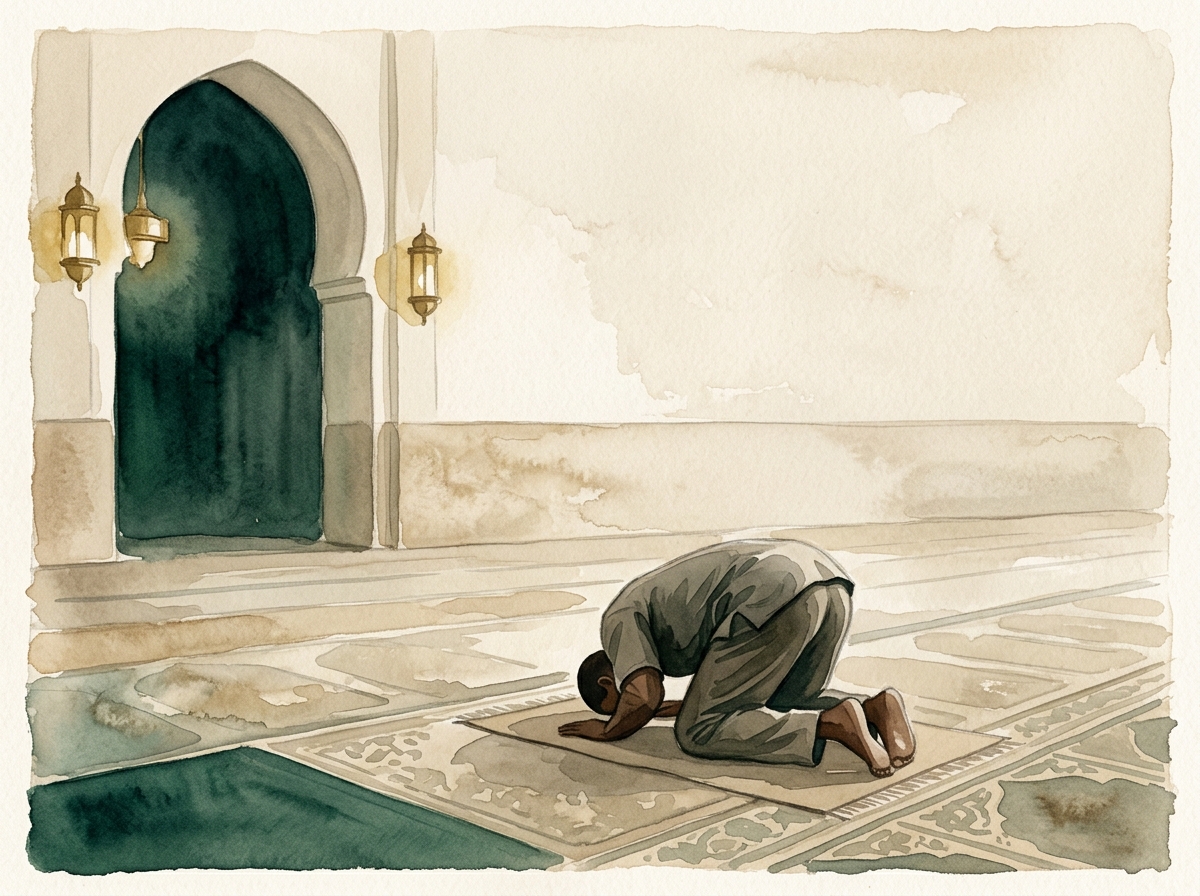
3. Prostrate and settle
Reach prostration, then remain until you are at ease.
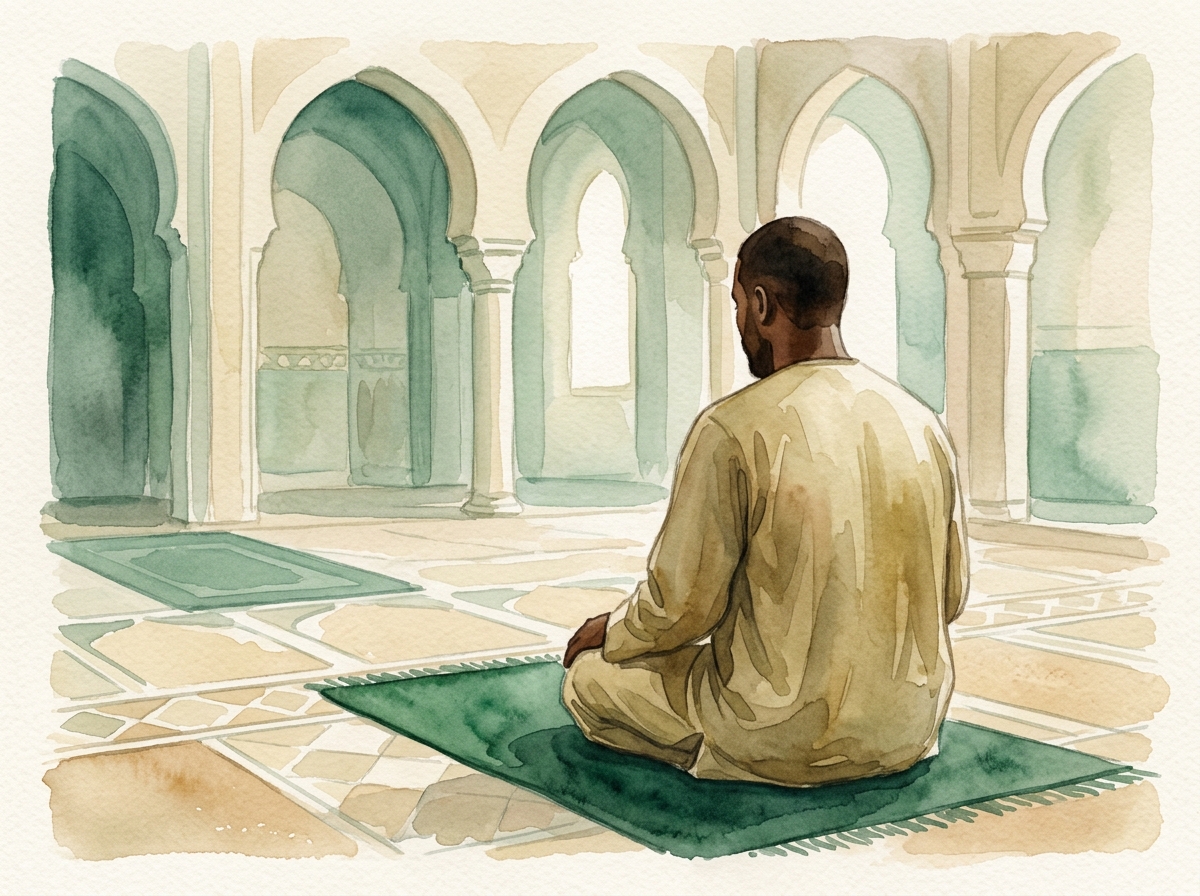
4. Sit between prostrations
Come into sitting and remain at ease before the second prostration.
A SIMPLE METHOD
Use this in every posture
- Move Enter the posture without racing.
- Settle Let your body become still and balanced.
- Continue Only then move into the next posture.
THE PRACTICE
Move into the posture. Become still. Then continue.
Tuma'ninah is not about making prayer complicated. It is about slowing down enough for each posture to settle.
PRACTICE
Mentally rehearse one cycle
Tap each posture, then put the sequence in order.
HONEST CHECK-IN
What happens in your prayer now?
There is no score here. Simply notice your usual pace.
QUICK CHECK
The pattern to remember
- Reach the posture Do not treat it as a point you pass through.
- Become still Allow the posture to settle until you are at ease.
- Then continue Carry this deliberate pace throughout the prayer.
APPLY TODAY
Choose where you will slow down
Carry one clear intention into your next prayer.
To remember
Tuma'ninah means letting each prayer posture become still and at ease before you move on.
Takeaways
- The correction The Prophet ﷺ had the man repeat his rushed prayer three times, then taught him clearly.
- The settled sequence Be at ease in bowing, stand fully straight, be at ease in prostration, and sit at ease between prostrations.
- The daily practice Slow down enough for every posture to settle throughout your prayer.